This is for you if
- Your coach tells you what to change, you understand her completely, and your body still does the old thing.
- You’ve been stuck on the same element for months and more repetitions aren’t moving it.
- Your skating works, and you know it could be smoother and cost you less effort than it does.
- Sunday, October 4th at 4:00 PM CET
- A live 90-minute class with Maja
- The four somatic principles, taught and practised
- Your questions answered live
Here’s what makes this different
Here’s what I see over and over as a coach. The skater knows the shape. What she can’t do is feel where she is inside it, so every repetition is a guess and the correction never quite lands. That isn’t a knowledge problem, and it isn’t a question of more ice time. Nobody ever taught her to feel where her body actually is while it’s moving. Most skating instruction works from the outside in: look at it, correct it, push through it. This works the other way round. You’ll learn to feel the position before you try to produce it, which is the order your body actually needs.
Here’s who you’re learning from
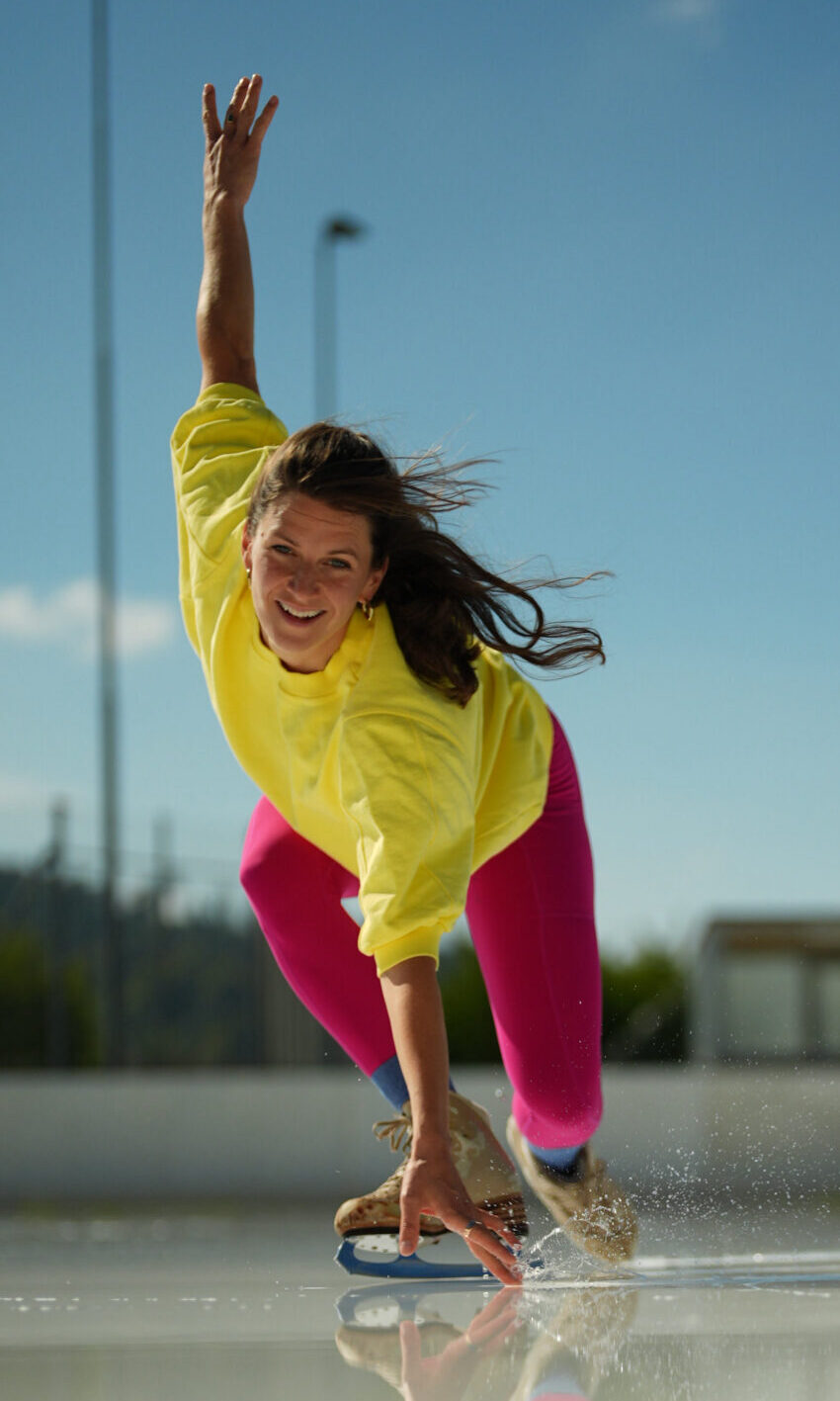
I’m Maja Luther. I’ve skated since I was three and competed to German national junior level, then performed as a principal soloist in around 40 countries. I choreograph for Swiss national and Olympic skaters, including Alexia Paganini, and I’ve coached since 2006.
At 28 I went back to school at Trinity Laban in London and finished an MA in Creative Practice with Distinction. My research on somatics in figure skating is published in the Journal of Dance & Somatic Practices, and this class is that research, taught live.
The four principles, and where each one lands on the ice
Each one gets paired with something you already do: your spinal rotation, your leaning, your knee bend.
Here’s what’s inside
All you need is a bit of floor space, a chair without arms, and something to stand on in socks or bare feet. A mirror helps for one exercise, and your camera does the same job if you don’t have one.
Here’s what changes for you
Coming with you afterwards
How to join
Join the DSS community, which is free right now, and you will find the class on the community calendar for Sunday, October 4th at 4:00 PM CET. Come a couple of minutes early so you are settled when we start.
What you need
Here’s the offer
The live 90 minutes, the three rink resources and your questions answered, all of it free. The recording goes on sale afterwards, from CHF 29.
The class happens once, and the room is where the Q&A actually helps you.
Being in the room is the whole point. I can see what you’re doing, so I can answer the thing you’re actually stuck on while you’re still feeling it. That is what the live 90 minutes gives you.
Already inside DSS? You are in. Add Sunday, October 4th to your calendar and I will see you there.
A quick note
This class shares general movement guidance for adult skaters. If you have an injury or a health concern, check with a qualified professional before joining in.